
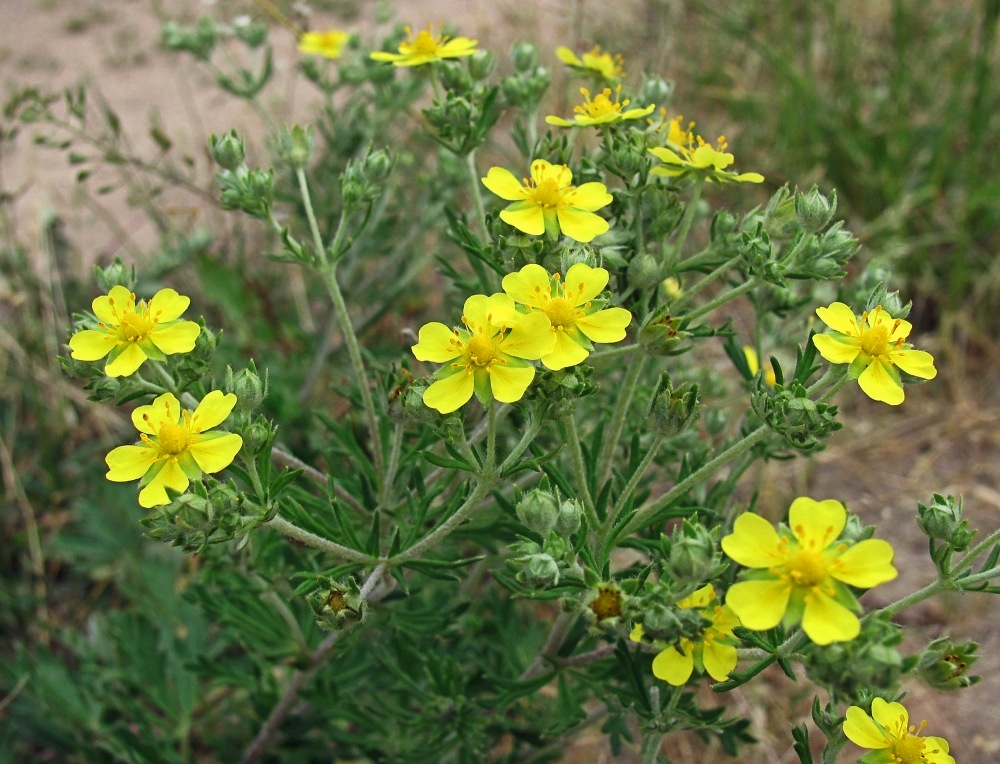
What it is
Silver cinquefoil (Potentilla argentea) is a hardy perennial in the rose family. It grows on dry, nutrient-poor soils across much of Europe and into parts of Asia and North America.
Traditional herbal sources use the whole plant, especially the roots and rhizome, which are rich in tannins and other polyphenols associated with astringent activity.
Traditional uses
- Digestive astringent: Used traditionally for diarrhea and inflammatory bowel complaints where an astringent approach was desired.
- For mouth and skin: A decoction has been used externally for irritated skin, cracked areas, and as a rinse.
- Support in gout and rheumatic complaints: Mentioned in traditional sources as part of broader herbal mixtures.
How it is commonly prepared
- Root/rhizome decoction: Gently simmered and strained; traditionally taken in small servings or used as a wash.
- Infusion: A milder preparation used traditionally for internal or external use depending on context.
- Powder (external): Root powder has been used traditionally on minor wounds as a drying, astringent dressing.
Notes on safe use
- Astringent herbs can be constipating: If you are prone to constipation, use cautiously.
- Separate from medicines: Tannin-rich herbs may interfere with absorption of some medications; separate by a few hours.
Safety and precautions
- Avoid in hypotension. Traditional sources advise people with low blood pressure to avoid it due to possible BP-lowering effects.
- Stop if dizziness or intolerance occurs. Reduce or discontinue if you feel unwell.