
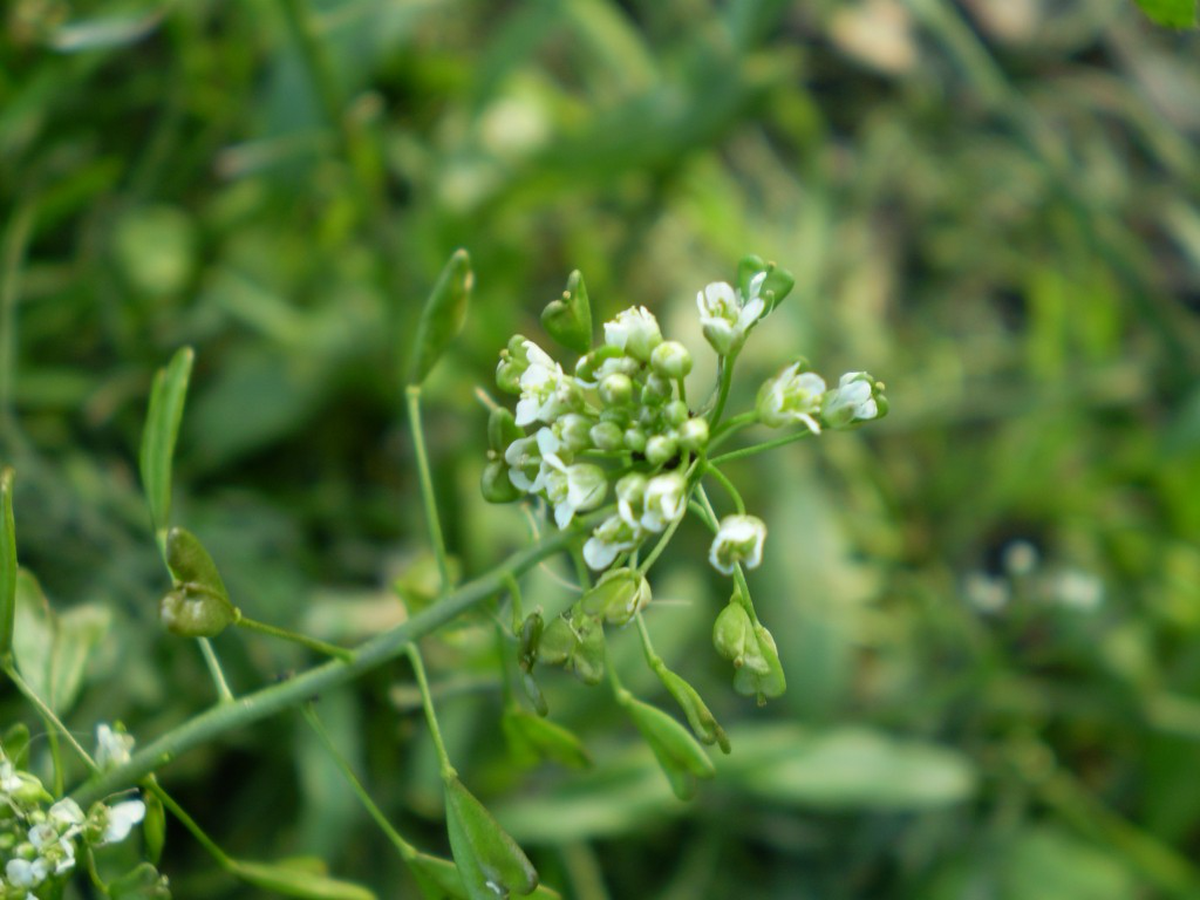
What it is
Shepherd’s purse (Capsella bursa-pastoris) is a hardy plant in the mustard family (Brassicaceae). It grows widely along roadsides, field edges, disturbed ground, and garden borders, often thriving in well‑drained, slightly sandy, nitrogen‑rich soils in sun or partial shade.
It is an annual or biennial plant that can reach around 60 cm. It forms a basal rosette of toothed leaves and produces small white flowers from spring well into late summer.
Traditional uses
In European folk traditions, shepherd’s purse has been valued as an astringent herb and is best known historically for use in situations involving unwanted bleeding. Older sources also describe use in a wide range of conditions, including digestive upset and urinary tract complaints.
Modern herbal practice sometimes discusses preparations in the context of uterine tone, but this is not the same as medical treatment and should not replace professional care—especially when symptoms are severe, persistent, or recurring.
How it is commonly prepared
- Tea/infusion: Dried aerial parts are steeped in hot water and taken in small amounts.
- Tincture or liquid extract: Used in some traditions for more standardized dosing.
- Food use: Young rosette leaves have been eaten in salads or lightly cooked in soups in some cultures.
Safety notes
Do not use high amounts. Traditional sources warn that excessive intake may cause adverse effects.
Avoid collecting plants that show a white fungal coating (often linked to Cystopus candidus)—these should not be harvested.
There is a risk of misidentification with similar species (including some Thlaspi species). If you are not experienced in plant identification, do not forage it yourself.
If you have unexplained bleeding, pregnancy‑related bleeding, or symptoms of infection (fever, severe pain), seek medical help promptly.