
Herb Library
Mistletoe
A unique evergreen plant traditionally used for immune support and integrative oncology under medical supervision.
Overview
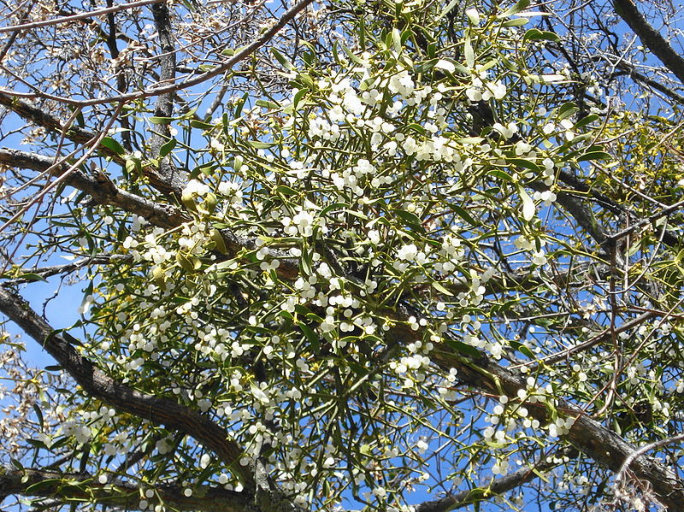
European mistletoe (Viscum album) is an evergreen, semi-parasitic plant growing on deciduous or coniferous trees. It forms rounded clumps and has a long cultural history in European traditions.
Parts used
Medicinal preparations may use fresh or dried twigs with leaves, flowers, and berries. In clinical integrative settings, standardized extracts are commonly used as injections under medical supervision.
Key constituents
Mistletoe contains lectins, polypeptides, mucilage, flavonoids, lignans, triterpenes, and other compounds. Lectins are frequently discussed in research and integrative oncology contexts.
Traditional & integrative uses
Folk traditions describe mistletoe for long-term supportive use in mild high blood pressure, nervousness, and circulation complaints. In integrative oncology, mistletoe injections are used as supportive therapy to improve wellbeing and immune parameters in some patients.
Tea preparation (cold infusion)
Stir 1 teaspoon mistletoe herb into 150 mL cold water, steep 10–12 hours, strain. Drink 1–2 cups daily.
Safety & warnings
Do not self-treat cancer with mistletoe. Injectable preparations must be prescribed and dosed individually by a clinician.
Injectable use is contraindicated in known protein hypersensitivity, chronic infections such as tuberculosis, or fever. Side effects may include local inflammation, chills, fever, headache, circulatory disturbances, and rarely allergic reactions.