
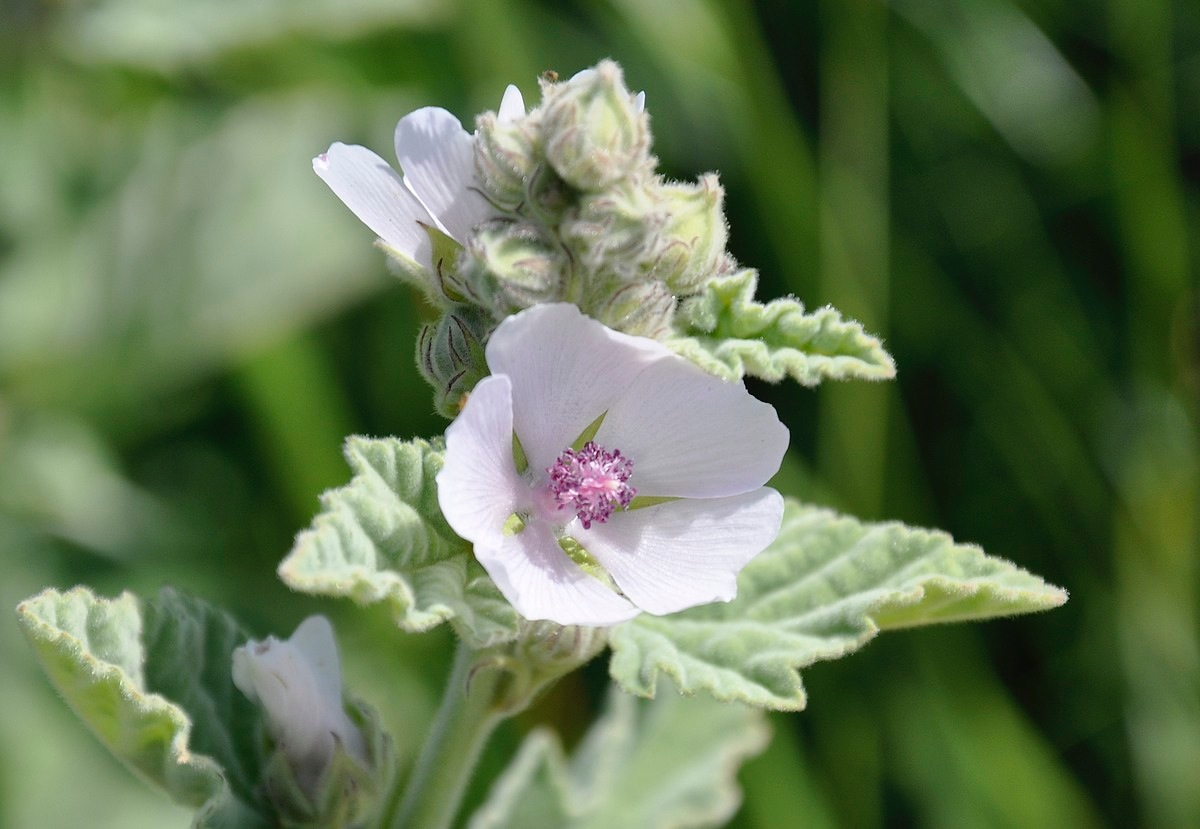
What it is
Marshmallow (Althaea officinalis) is a tall, softly hairy perennial in the mallow family. The root and leaves are especially valued for their mucilage (slippery polysaccharides) and pectins.
Historically, marshmallow was cultivated in Europe for its soothing properties and is referenced in classical and medieval herbals.
Traditional uses
- Throat and airways: Traditionally used for dry, irritated coughs, sore throat, and difficult expectoration.
- Digestive comfort: Mucilage-rich preparations have been used to soothe irritated mucosa in the stomach and intestines.
- Topical soothing: Used externally as washes or compresses for irritated skin and minor burns.
How it is commonly prepared
- Cold infusion (root): Root is soaked in cool water for an extended time and stirred occasionally, then strained. This preserves mucilage.
- Warm tea (leaf): Leaves are infused briefly in hot water; often taken several times per day.
- Syrup or extract: Common in traditional cough preparations; follow product instructions for dosing.
Notes on quality and use
- Dry the root quickly after harvest: Traditional guidance emphasizes rapid drying to prevent mold.
- Separate from medications: Mucilage may slow absorption of some medicines; take marshmallow at a different time.
Safety and precautions
- Pregnancy and breastfeeding: There is limited safety data; consider avoiding or consult a qualified professional.
- Allergy is possible. Discontinue if you develop rash, itching, or other signs of intolerance.