
What it is
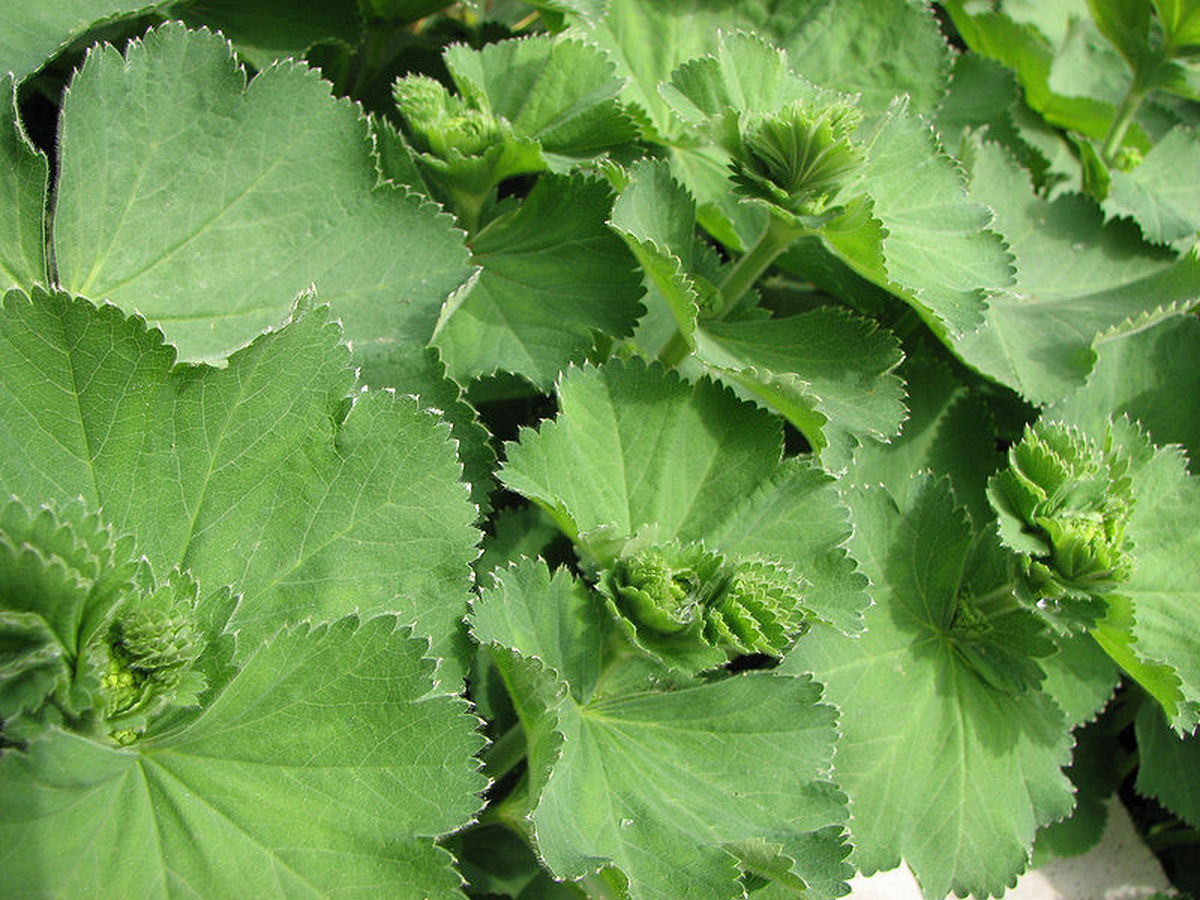
Lady’s mantle (Alchemilla vulgaris) is a perennial herb found on woodland edges, damp meadows, roadside verges, and in mountainous regions. It is known for its round, scalloped leaves that often hold a bright dew drop in the center in the morning.
The flowering tops and leaves are used traditionally. In higher mountain areas, closely related “silver mantle” forms are described in folk texts.
Traditional uses
In European folk herbalism, lady’s mantle is considered an astringent and “wound‑supporting” herb. It has a long reputation for use in women’s health traditions, including support around menstrual irregularity and discomfort during the menopausal transition.
Traditional texts also describe use for mouth rinses after dental extraction, for minor skin issues, and as a general strengthening tea.
How it is commonly prepared
- Tea: Pour boiling water over the herb and steep briefly. A traditional method is 1 heaped teaspoon per 250 ml, steeped shortly.
- Compress: Fresh herb is quickly rinsed, gently crushed, and applied externally.
- Bath additive: Traditional practice describes soaking the herb overnight in cold water, warming it the next day, and adding it to bath water.
Safety notes
Because it is strongly astringent, start with modest amounts and discontinue if it causes constipation or stomach upset.
Pregnancy: folk sources sometimes describe use during pregnancy. This is not a safety guarantee—if you are pregnant or breastfeeding, consult a qualified clinician before using concentrated herbal preparations.
If symptoms suggest anemia, heavy bleeding, severe pelvic pain, infection, or a persistent lump/swelling, seek medical evaluation.