
What it is
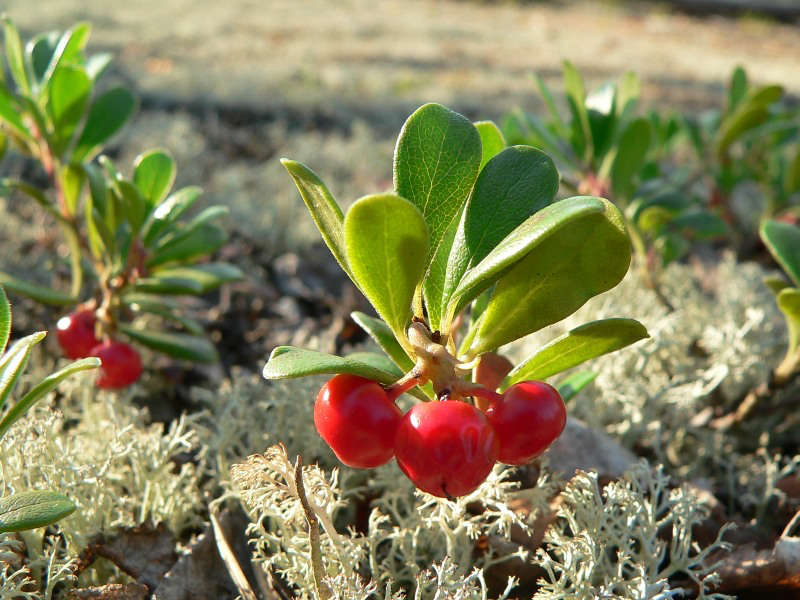
Bearberry (Arctostaphylos uva‑ursi) is an evergreen, woody plant in the heather family (Ericaceae). It has tough, leathery leaves and flexible, reddish‑brown twigs. The leaves are typically 12–30 mm long and 4–14 mm wide.
Bearberry resembles lingonberry in appearance. A commonly noted distinction is that lingonberry leaves often show small dark dots on the underside, while bearberry leaves typically do not.
History & habitat
Bearberry has been mentioned in European herbals since at least the 13th century. Its medicinal effects were studied more systematically in the 18th century by physicians such as De Haen. The Greek name (arctostaphylos) and the Latin (uva‑ursi) both refer to “bear grape,” reflecting traditional observations that bears may eat the berries.
Bearberry grows in light forests, heathlands, and scrub, especially across temperate regions of North America and Eurasia. Some North American Indigenous groups are reported to have used bearberry leaves in smoking mixtures.
Parts used
The leaves are the primary medicinal part (fresh or dried leaf).
Key compounds
A characteristic constituent is arbutin (a hydroquinone glycoside). Other constituents include tannins, flavonoids, and triterpenes (including ursolic‑acid derivatives). Traditional pharmacology describes arbutin being metabolized to hydroquinone derivatives in the urinary tract, contributing to antimicrobial activity.
Traditional uses
Bearberry leaf has a long reputation as a urinary antiseptic and diuretic herb. Traditional uses include support for:
- Lower urinary tract discomfort (e.g., bladder irritation) when medical evaluation does not indicate a complicated infection.
- Urinary retention and “water retention” in some folk contexts.
Traditional sources also mention a wide range of other uses (from digestive complaints to chronic kidney conditions), but urinary support is the best‑known historical role.
How it is commonly prepared (traditional)
- Decoction: a common traditional ratio is 10 g dried leaf per 200 ml water; taken in spoon‑sized servings several times daily.
- Nerve “strengthening” decoction (folk use): leaf simmered gently for an extended period, strained, and taken as tea in divided doses.
Safety & cautions
- Do not use long‑term. Bearberry is generally intended for short courses. Prolonged or high‑dose use may irritate the gastrointestinal tract and kidneys.
- Avoid in pregnancy and breastfeeding, and in children, unless advised by a clinician.
- Kidney disease: avoid if you have glomerulonephritis or significant kidney impairment unless supervised by a clinician.
- Because tannins can irritate the gut, decoctions may cause nausea or stomach upset in sensitive people.
- If urinary symptoms are severe (fever, flank pain, blood in urine) or do not improve quickly, seek medical care.
Note: ESCOP (European Scientific Cooperative on Phytotherapy) has discussed bearberry leaf for uncomplicated urinary tract infections when antibiotics are not required; always consult a clinician for diagnosis and treatment decisions.
Disclaimer: This page is for educational purposes only and does not provide medical advice. Herbs can interact with medications and may not be appropriate for everyone. If you are pregnant, breastfeeding, have a medical condition, or take prescription medicines, consult a licensed clinician before using any herbal product.