
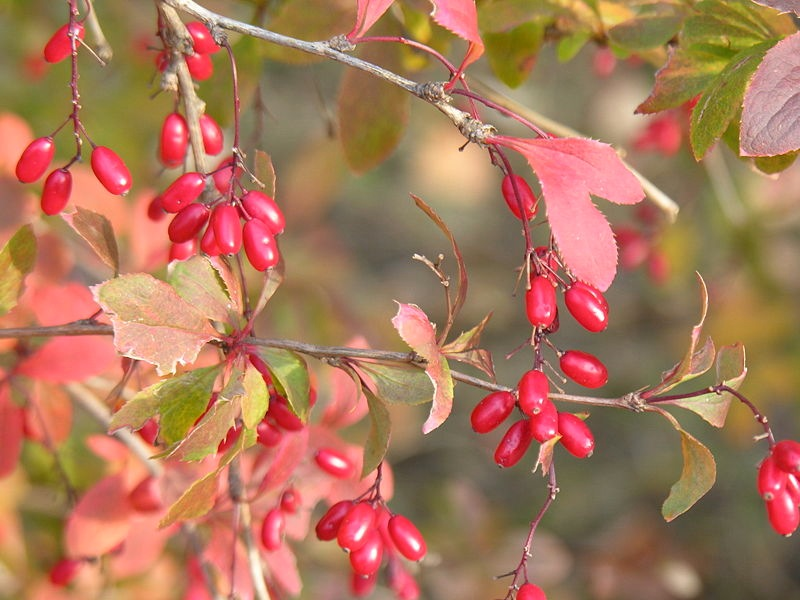
What it is
Barberry (Berberis vulgaris) is a thorny shrub native to parts of Europe and Asia. It produces yellow flowers in spring and bright red berries that ripen toward late summer and autumn. In traditional herbal practice, different parts of the plant have been used, including the root bark, bark, leaves, and berries.
Key compounds
Barberry contains several alkaloids, most notably berberine. Traditional texts associate berberine-rich plants with bitter, “cholagogue” (bile-supporting) and antimicrobial uses. Barberry also contains tannins and organic acids; the berries provide vitamin C and other plant constituents.
Traditional uses
Historically, barberry preparations were used to support liver and gallbladder function and to promote digestive comfort. Folk use also includes support during upper respiratory irritation, and as part of traditional approaches for general vitality and convalescence.
In some traditions, barberry has been used in formulas for nausea, “bitter tonic” support, and as a general wellness herb. These are traditional uses and are not a substitute for medical diagnosis or treatment.
How it is commonly prepared
- Leaf decoction (traditional): A small amount of dried, chopped leaves simmered gently, then strained. Traditionally used in small servings.
- Berry decoction (traditional): Crushed ripe berries simmered and strained. Traditionally used before meals as a bitter-and-sour tonic.
- Root or bark decoction (traditional): Simmered longer than leaves/berries. Root/bark preparations are more concentrated and should be approached with extra caution.
- Tincture (traditional): A small amount of dried plant material macerated in alcohol and taken by drops. Use conservative amounts and consult a qualified professional if unsure.
Notes on safe use
- Unripe berries may be irritating or toxic. Traditional sources warn that unripe fruits should be avoided.
- Start low. Bitter, berberine-containing herbs can be strong; begin with conservative amounts and watch for intolerance.
- Interactions are possible. Berberine may interact with certain medications. If you take prescription medicines, consult a clinician before use.
Safety and precautions
- Avoid in pregnancy. Traditional sources recommend avoiding barberry and berberine-containing preparations during pregnancy.
- Do not use if you have a known allergy to barberry or related plants.
- If you have a liver condition, gallstones, chronic illness, or take medication, consult a licensed clinician before using barberry products.
Disclaimer: This page is for educational purposes only and does not provide medical advice. Herbs can interact with medications and may not be appropriate for everyone. If you are pregnant, breastfeeding, have a medical condition, or take prescription medicines, consult a licensed clinician before using any herbal product.