
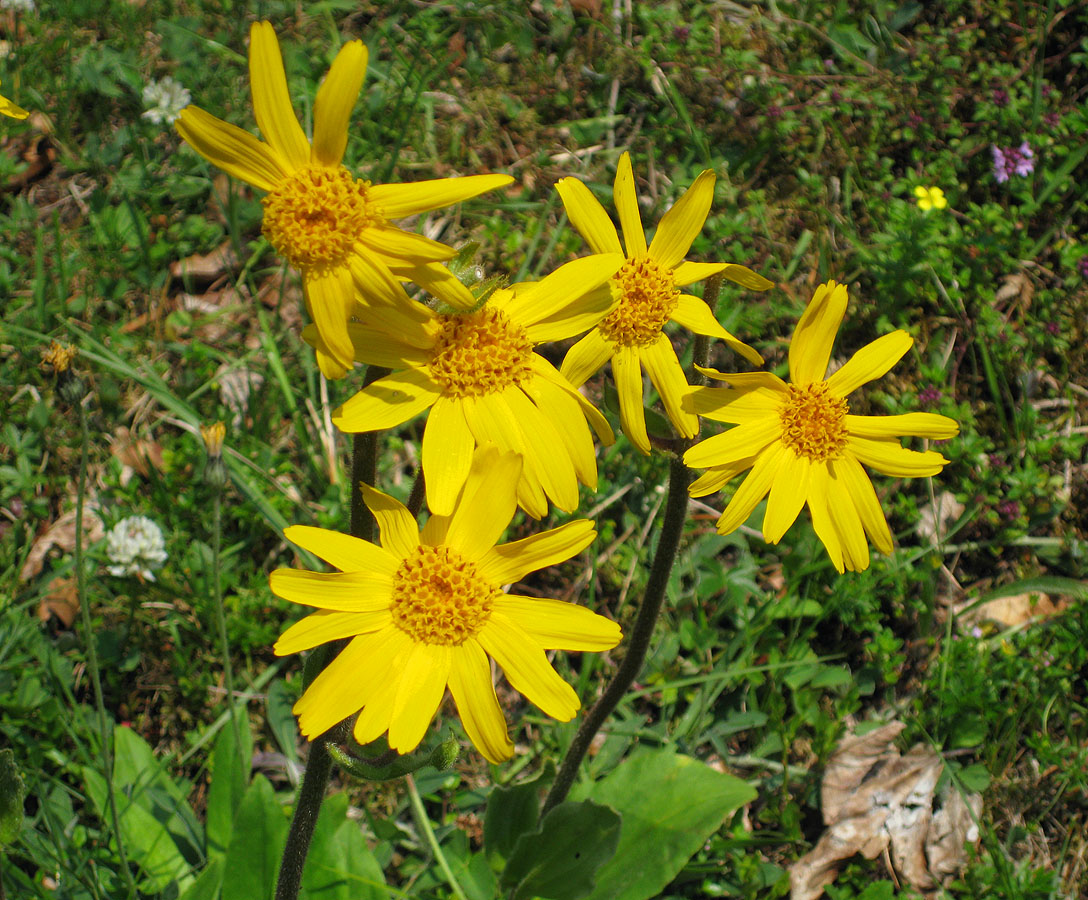
What it is
Arnica (Arnica montana), sometimes called mountain arnica, is a perennial herb in the daisy family. It is native to mountainous and heathland areas of Europe and is considered rare and protected in parts of its range.
All parts of the plant contain biologically active compounds (including sesquiterpene lactones such as helenalin). These can irritate the skin in sensitive people and make arnica unsafe for internal use.
Traditional uses
- For bruises and bumps: Arnica has a long history as a topical remedy for contusions, swelling, and sore spots.
- For muscle soreness: Diluted preparations are traditionally used after overexertion to support comfort.
- In oral-care products: Arnica extracts have been used in some cosmetics and toothpaste formulations (not for swallowing).
How it is commonly prepared
- Diluted tincture (external): Traditionally diluted about 1:10 with water for compresses or rinses (do not swallow).
- Infusion for compress (external): A small amount of dried flowers steeped briefly; used cooled as a cloth compress.
- Gel/ointment (external): Commercial preparations are common and help control concentration.
Notes on safe use
- External use only: Traditional sources and modern safety guidance advise against internal use due to toxicity risk.
- Avoid broken skin: Do not apply to open wounds or damaged skin, and do not use long-term on the same area.
- Patch test first: Arnica can trigger dermatitis, especially in people sensitive to plants in the daisy family.
Safety and precautions
- Do not take arnica internally. Internal use can irritate the digestive tract and may cause serious adverse effects.
- Avoid if allergic to Asteraceae/Compositae. If you react to daisies, chamomile, ragweed, etc., arnica may also cause reactions.
- Stop if rash or burning occurs. Discontinue and seek advice if symptoms are significant or persistent.